How Much Do Organization Services Cost?
Starting at $34/hour on average
Updated on June 1, 2026


Table of Contents
- Get the Cost of Organization Services in Your Area
- Professional Organization Cost Estimates Supplemented with Real Taskrabbit Data
- Factors that Impact How Much Organization Projects Cost
- Hidden or Often-Overlooked Organization Costs to Consider
- Common Organization Projects and Their Average Cost
- Frequently Asked Questions about Organization Services
Get the Cost of Organization Services in Your Area
Browse different rates for home organization in your area and select the one that fits your budget and needs.
Get RatesProfessional Organization Cost Estimates Supplemented with Real Taskrabbit Data
Hiring an experienced organizer can feel like a luxury, until you realize you’re staring at an overflowing closet, a garage you can’t park in, or a home office that makes it hard to focus. For many households, hiring help for organization is less about aesthetics and more about reclaiming time, reducing stress, and making everyday life easier.
If you’re wondering how much hiring an organizer costs, look no further. Using research and real Taskrabbit data, this guide breaks down typical price ranges for a skilled home organizer. On average, organization tasks cost an $34 per hour in the U.S.
Average Cost for Organization Services in Major U.S. Cities
While national averages provide a helpful baseline, organization costs can vary significantly by location. The table below highlights typical hourly rates and project costs in major U.S. cities.
| City | Avg Hourly Rate | Avg Invoice Total |
|---|---|---|
| New York City | $44 | $188 |
| LA & OC | $39 | $178 |
| SF Bay Area | $48 | $208 |
| Chicago | $38 | $170 |
| Washington DC | $44 | $183 |
| Seattle | $44 | $167 |
| Miami | $37 | $199 |
| Boston | $41 | $145 |
| Austin | $42 | $158 |
| Denver | $38 | $126 |
Average Hourly Organization Rates by U.S. State
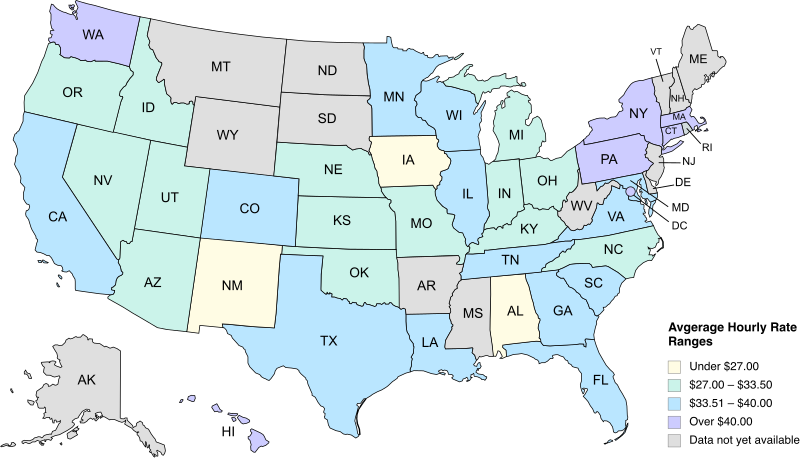
While city-level data highlights pricing in major markets, organization costs can vary just as much across broader regions of the country. Differences in cost of living, demand, and availability all contribute to how hourly rates shift from one area to another.
The map above shows how organizing service rates differ across the U.S., offering a wider view beyond individual cities. For example, hourly rates in higher-cost regions such as Massachusetts ($40+/hour) tend to exceed those in more affordable areas like New Mexico (<$27/hour), on average.

Factors that Impact How Much Organization Projects Cost
An experienced organizer helps individuals and households sort, declutter, and create systems that make spaces easier to use and maintain. Organizers work with customers to understand how a space is used day to day, and then design solutions that support those habits, so the cost is unique to the scope and requirements of each project with many influencing factors.
Type of Organization Project
The type of organizing work involved plays a major role in overall cost, as different projects require different levels of time, physical effort, and decision-making support.
Different projects require different levels of effort. Common types include:
Closet organization: Focuses on sorting clothing, shoes, and accessories, creating categories, and setting up systems for daily use, seasonal rotation, and long-term maintenance.
Garage organization: Involves grouping tools, equipment, and storage items, often requiring heavy lifting, zoning by function, and coordination for disposal or donations.
Pantry or kitchen organization: Centers on grouping food items and supplies, improving accessibility, and setting up containers or labels to make restocking and daily use easier.
Home office organization: May include organizing paperwork, creating filing systems, improving desk layout, and sometimes addressing digital files to support productivity.
Downsizing or moving prep: Helps sort and prioritize belongings during life transitions, often involving emotional decision-making and coordination for selling, donating, or discarding items.
Digital organization: Focuses on organizing files, photos, emails, or digital workflows rather than physical spaces, often through structured systems and naming conventions.
Virtual organization: Remote sessions conducted over video that focus on planning, decluttering guidance, and system design rather than hands-on work
Projects involving decision fatigue or emotional attachment often take longer, increasing costs.
Size of the Space
The physical size of the space being organized is one of the most straightforward factors affecting cost. Larger spaces generally take more time to sort, arrange, and set up systems, which can increase the total number of hours required.
Size considerations often include:
Square footage
The number of rooms or zones involved
The amount of storage surface area, such as shelves, drawers, or wall space
Even within the same category, a walk-in closet will typically require more time than a reach-in closet simply due to scale.
Scope
Scope refers to the complexity of the organizing work itself, independent of the space’s physical dimensions. A smaller space with heavy clutter, mixed categories, or significant decision-making can take longer than a larger space that’s lightly used and already partially organized.
Scope is influenced by:
The volume of items
The variety of categories involved
Emotional attachment to belongings
Whether systems need to be created from scratch
Projects that involve paperwork, memorabilia, or long-neglected storage areas often have a broader scope and require more hands-on time.
Organizer Experience and Specialization
An organizer’s background, experience level, and areas of specialization can influence pricing and efficiency. More experienced organizers or those with niche expertise often charge higher rates.
Location
Where you live plays a significant role in organizer pricing due to differences in local cost of living and market demand.
Urban and high-cost areas typically have higher hourly rates than suburban or rural markets. Travel time may also influence pricing.
Hourly vs. Flat-Rate Pricing
How an organizer structures pricing is another important cost factor, as it determines how estimates are calculated and how flexible the project can be.
Hourly pricing is common when the scope of work is uncertain or clutter levels vary. Hourly pricing allows projects to evolve as decisions are made but can make total costs harder to predict.
Flat-rate or package pricing may be used for clearly defined projects, such as a set number of rooms or hours. Flat rates provide cost certainty upfront but may be less flexible if the scope changes mid-project.
Supplies and Storage
Many organizing projects require physical products to support long-term organization, which can add to the total cost.
Bins, shelving, labels, and other materials are usually not included in service fees. Costs vary widely depending on whether solutions are budget-friendly or custom.
Plastic bins: $5-$30+ each
Fabric bins: $10-$35+ each
Hangers: $3-$25 per pack
Shoe racks: $20-$100+ each
Under-bed storage: $20-$75+
Wall-mounted shelves: $30-$150+ per shelf
Garage storage racks: $150-$600+
Food containers: $5-$25+
Shelf risers: $10-$40+
File cabinets: $30-$200+
Timeline and Urgency
The timeframe for completing an organization project can also affect pricing, particularly when deadlines are tight.
Rush projects, extended days, or short notice timelines may increase hourly rates or require premium pricing to accommodate availability.
One-Time vs. Ongoing Services
Some customers hire an organizer for a single project, while others opt for ongoing support. Maintenance sessions, seasonal refreshes, or periodic check-ins are often billed at a lower hourly rate once systems are in place. Ongoing services can reduce long-term costs by preventing clutter from building back up.
Hidden or Often-Overlooked Organization Costs to Consider
In addition to an organizer’s base rate, there are several items that may contribute to the final cost of a project but are not always included in initial estimates.
While not necessarily unexpected, certain services or expenses are commonly excluded from base pricing, such as:
Initial consultations: Some organizers charge separately for consultations or assessments, especially if they involve in-home visits, planning time, or written recommendations.
Disposal or donation coordination: Fees may apply if the organizer helps arrange hauling, recycling, or donation drop-offs, particularly for large volumes of items.
Shopping time for supplies: Time spent sourcing bins, shelving, or other storage solutions may be billed separately from hands-on organizing work.
Follow-up or maintenance sessions: Additional visits to fine-tune systems or maintain organization are often optional and billed separately.
Service minimums: Many organizers require a minimum number of hours per booking, which can affect the total cost for smaller projects even if less time is ultimately needed.
Clarifying what’s included upfront helps avoid surprises.
Common Organization Projects and Their Average Cost
While professional organizing projects can vary widely, many fall into a handful of common categories. Reviewing typical project types and their associated cost ranges can help you understand how pricing is usually structured and how a similar project in your own home might compare.
Also note that, as part of the project, your organizer may also recommend installing additional shelves or cabinets to store items. Shelf installation can cost from $150-$500, and cabinet installation $1,500-$5,000.
| Project | Estimated Cost |
|---|---|
| Closet organization | $150-$2,000 |
| Garage organization | $300-$2,500 |
| Pantry organization | $200-$750 |
| Digital organization | $100-$500 |
| Virtual organization | $100-$400 |
| Whole-home organization | $1,500-$10,000 |
| Home office organization | $200-$800 |
How Long Does Professional Organization Take?
The amount of time a professional organizing project takes can vary widely depending on the size of the space, the level of clutter, and how quickly decisions can be made.
Typical time estimates for example projects include:
Closet organization: 3–6 hours for a standard reach-in or small walk-in closet, depending on clothing volume and sorting needs.
Pantry organization: 3–5 hours, often influenced by the number of items, container setup, and labeling preferences.
Garage organization: 6–12 hours or more, as garages often involve heavy items, large quantities, and disposal coordination.
Home office organization: 4–8 hours, particularly when paperwork, filing systems, or digital organization are involved.
Larger or more complex projects, such as whole-home organization or downsizing, may require multiple sessions spread over several days.
Tips to Save Money on Organization Services
If you’re working within a budget, there are several practical ways to reduce the overall cost of organization services without sacrificing resultsThese strategies focus on minimizing paid time and avoiding unnecessary add-ons.
Declutter obvious items before sessions: Removing trash, expired products, or clearly unwanted items ahead of time allows the organizer to focus on higher-value work rather than basic sorting.
Bundle multiple rooms: Organizing several spaces in one engagement can be more cost-effective than booking separate projects, especially when minimum hours apply.
Schedule during off-peak times: Off-peak times typically include weekdays during standard business hours and periods outside of major organizing seasons. Demand for organizing services is often highest in early spring, during summer moves, and at the start of a new year..
Be available for quick decisions: Being present to answer questions, such as what to keep, donate, or discard, helps avoid delays. Faster decisions keep the project moving efficiently and can reduce the total number of hours needed.
Use existing storage when possible: Reusing bins, shelves, and containers you already own can significantly cut down on additional supply costs.
DIY vs. Hiring Organization Help
Deciding whether to organize your space yourself or work with a professional often comes down to time, budget, and how overwhelmed the project feels. Both approaches can be effective, depending on the situation.
DIY organization is typically the most affordable option and allows you to work at your own pace. It can be a good fit for smaller projects or spaces with minimal clutter. That said, organizing on your own often takes longer and can become challenging when decision fatigue, emotional attachment, or lack of structure slows progress.
Hiring a professional organizer involves a higher upfront cost, but many people find the investment worthwhile for faster results, reduced stress, and systems that are easier to maintain over time. Professional support is especially helpful for:
Large projects
Major life transitions
Spaces that have felt overwhelming to tackle alone
How to Choose a Professional Organizer
Choosing the right professional organizer can make a significant difference in both the experience and the outcome of your project. Taking time to evaluate options, ask the right questions, and understand how an organizer works can help ensure a good fit. When searching for an organizer, you should:
Ask about experience with similar projects
Read reviews and testimonials
Clarify pricing structure
Discuss communication style
Watch for vague estimates or pressure tactics
What to Expect When Booking Organization Tasks Through Taskrabbit
When booking an organization task through Taskrabbit, customers typically describe the space, goals, and timeline upfront. Taskers offering organization services set their own rates and availability, allowing customers to compare options and choose what works best for their needs. Communication before the task helps align expectations around scope, timing, and any supplies involved.
Frequently Asked Questions about Organization Services
Tipping is not required, but is appreciated. A tip of 10%-20% is customary.
For many households, the value lies in saved time, reduced stress, and improved daily routines. Whether it’s worth the cost depends on your budget, needs, and how much support you want.
Virtual organizing typically costs less per hour because it does not include travel time and often focuses on planning and guidance rather than hands-on work.
Organizers may recommend or help source storage products, but the cost of bins, shelving, and other supplies is usually separate from labor fees unless otherwise specified.